Lay it the day it lands.
Sod is living grass cut thin, and it does not keep. Fresh-cut sheets last only a short while stacked up,11 so have the ground finished before the truck arrives.
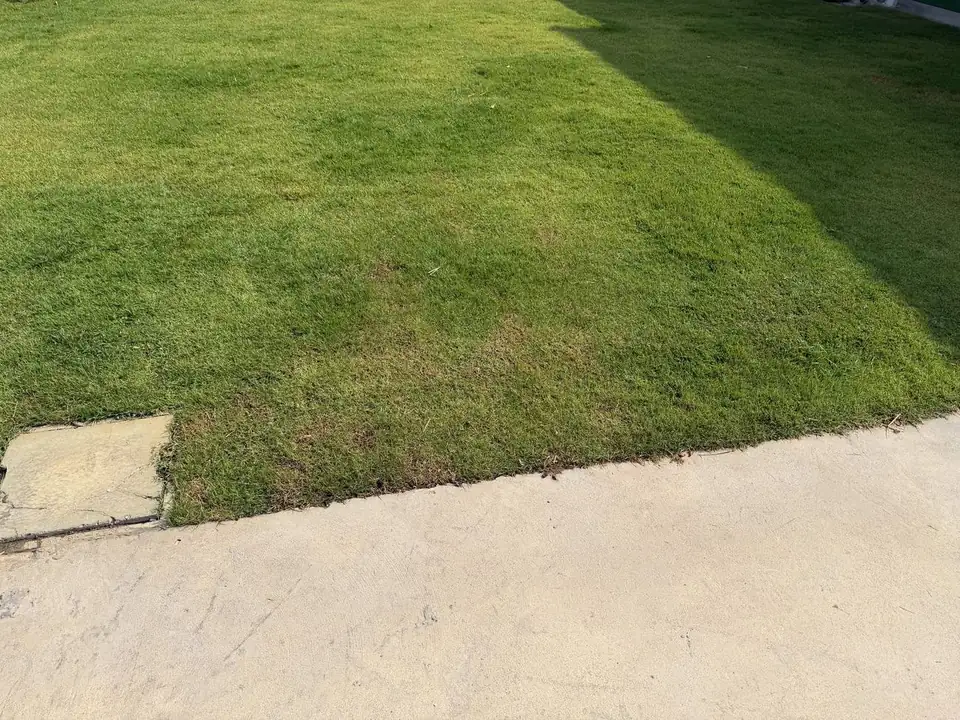
Before the truck comes.
Four jobs, in this order. All four should be done by the morning of delivery.11
Clear it
Kill the weeds and the old grass, then turn them under.11 Take out any stone bigger than a golf ball.6
Loosen it
Zoysia grows poorly in packed soil.6 Where the soil is poor, work compost into the top 15 to 25 centimeters.11
Level it
Rake it smooth. Leave no hollow that holds water, and give the ground a fall that carries rain away from the house.11
Dampen it
On the day, wet the soil so it is moist but not muddy. Sod laid on dry soil in the heat roots badly.12
Lay it like bricks.
- Start along the longest straight edge you have, a path or a wall, and work away from it.11
- Stagger each row against the last so that the joints never line up.11 13
- Push the edges together until they touch. Do not overlap them, and do not stretch a sheet to make it reach: stretched sod shrinks as it dries and opens a crack.13
- On a slope, never leave seams running straight downhill, where water will cut a channel.11 Peg the sheets until they have rooted.12
- Have one person watering while the others lay.11
- Trim the edges last, with a straight spade or a machete.11
- Finish by tamping or lightly rolling the whole lawn, so that the roots sit against the soil.12 13
The first three weeks.
Pick the day you will lay it. The first two weeks follow a Thai sod farm's instructions to its own customers; the third follows a university guide.
- Days 1 to 7Water four or five times a day.1 Keep the soil soft underfoot, but not so wet that it oozes.11
- Days 8 to 14Water once or twice a day.1 The sheets should have begun to grip by now; in good growing weather sod starts to anchor in about a week.11
- Days 15 to 21Water once a day.11
- After day 21Every other day is enough,11 and later only when the grass shows it is dry. Mow for the first time once the roots hold the sheets down firmly, and do not cut low.1
The screwdriver test
Push a screwdriver into the lawn. If it is hard to push in to the handle, the soil underneath is dry. If the blade comes out cool and damp, there is water enough.11
Blue-gray means dry
New sod that turns a bluish gray is short of water.11 Water it straight away. Do not wait for the next round.
Keep the football off it
A newly sodded lawn needs several weeks before it can take traffic or play.12
The best season to lay it.
Thailand's rains run from about the middle of May to the middle of October.10 Lay the grass then and the sky does part of the watering.
The dry months work too, if you can keep the soil moist every day: zoysia can go down at any time there is water for it.6 Without good irrigation, turf researchers on Guam, which has a dry season of its own, advise against starting a lawn in it at all, because new turf can need water several times a day.7
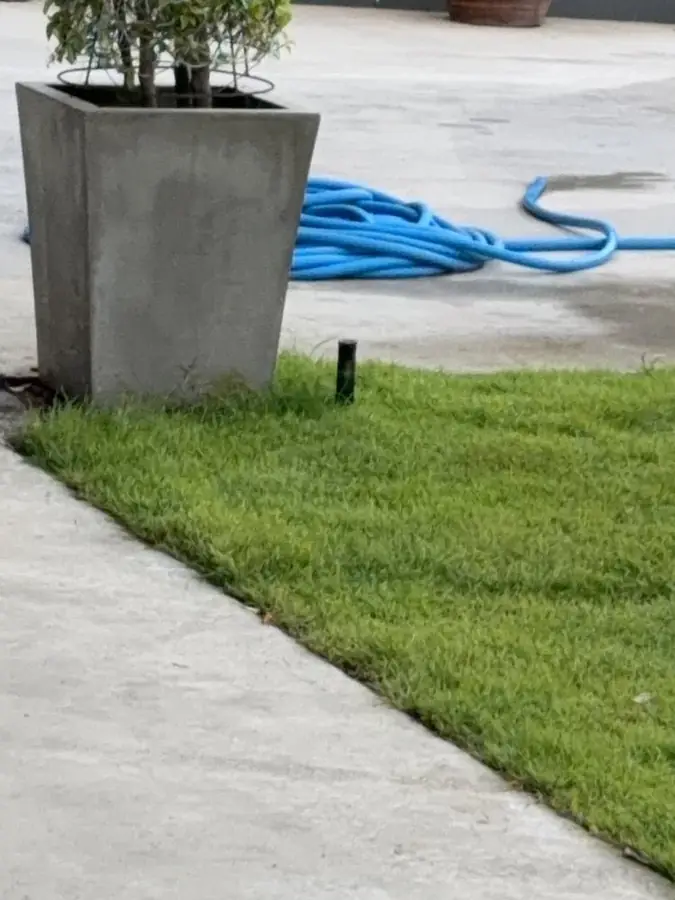
Questions on laying day.
The sheets look yellow off the truck. Are they dead?
Probably not. A yellow tinge on sod that has been stacked does not by itself mean it has died.11 Lay it and water it at once.
Can I lay it over my old lawn?
No. Kill the old grass and the weeds and turn them under first.11
How wet is wet enough?
In the first week the soil under the sheets should be soft underfoot but not oozing.11 After that, use the screwdriver test above.
When do I mow it for the first time?
Tell us the area and the address.
We come back with the grass and the delivery added up as one total, so you know the whole cost before you say yes.